I never forgave my secondary school for banning us from bringing novels to school. That is why I constantly speak about it.
Back then, unable to accept such a rule, I occasionally brought a book to school for some reading pleasure. Alas, the school prefects deemed me, a guy who was just sitting at the corner, quietly reading a book, a threat to school safety, thus my books were sometimes confiscated.
I had to write eloquent letters to the prefects just so I could get them back.
That is why, in some of my angry rants over the years, I couldn't stop blaming the local education system for not emphasizing the importance of literature and culture to its students, that we lived merely to score well academically, that our education was more on learning how to deal with exams, instead of preparing us properly to contribute to society. That our country is full of highly-educated folks who don't give a crap about literature.
Many years ago, back in Perth, Justin (who used to contribute to this blog but had since became a published novelist himself) once said this:
"I cannot imagine anyone not picking up a novel in their entire life. What sort of existence is that?"
I shrugged. "A typical Malaysian."
Being in love with literature is just as lonely as being passionate about films. Or maybe a little more so. At least most Joe Blows do go to cinemas for films as some social exercise. Any attempt to have a meaningful or deep discussion about the film will be futile. People will look at me as if I had farted loudly in a funeral.
Because they rarely happen, being able to go into in-depth discussions about films, filmmakers, or literary works, authors, can be a very pleasurable experience. Perhaps that is why I am often on Facebook and Twitter. Or why I often surf film websites and go through the comments section. Just to find and read about discussions that I can never seem to have in real life.
(Perhaps if I were a banker, I wouldn't have to deal with such a dilemma, no?)
Yesterday, Maggie Lee, film critic of Variety, tweeted this link to a book review:
I was intrigued too, especially after reading the last paragraph of the review.
Sounded a little like Borges' Book of Imaginary Beings.
So a conversation occurred.
(If you folks were wondering. The first Eco book I read was his first novel, THE NAME OF THE ROSE. I think that was around 2006. A year later, I read his final novel THE MYSTERIOUS FLAME OF QUEEN LOANA, and actually wrote down some of my thoughts. I was very young and impressionable.)
(My Perth years from 2004 to 2006 was a great period of time when I found myself exposed to a large number of great literature. Some of my most cherished memories of the place was wandering in the numerous bookshops in Fremantle, and then the Borders and Dymocks in Perth City.)
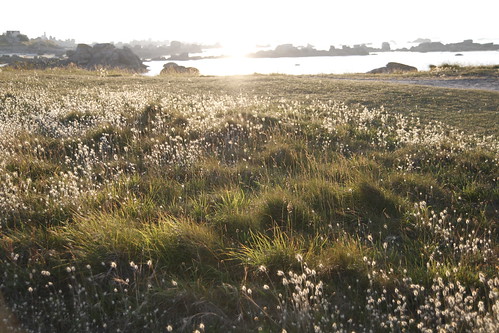
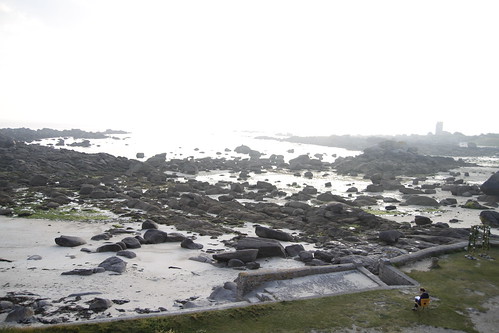
(I read HARDBOILED WONDERLAND 2 years ago, when I was at Brignogan, France. Alone in my hotel by the sea. It's a lovely place.)
(She meant the Hong Kong director Wong Kar Wai, to the uninitiated)
(Certain posts in this blog written in 2006-2007 had shown that I'm far from a Murakami fanatic. But I think my stance had softened lately. I actually enjoyed the first 100 pages of 1Q84, even though I haven't continued reading.
Perhaps After Dark was the turning point.)
(I have a lot of fondness for CHUNGKING EXPRESS. And still think that FALLEN ANGELS had one of the most romantic endings in cinematic history, ever.)
(Sadly, I'm a non-fan of the LOVE IN THE TIME OF CHOLERA film adaptation)
(I mentioned this intense reading experience here. I don't think many people really believed that I finish the book in one sitting.)
(Maggie was referring to the 1990 Chinese film BLOODY MORNING by Li Shaohong. Really want to catch this.)
(The world shudders.)
(This is the trailer for the first McDull movie. Came out in 2001.)
And this is when Twitch's Matthew Lee (no relations to Maggie, haha) joined in the discussion.
(The last time I met Maggie and Matthew was in Tallin, Estonia, during Christmas Eve, after I participated in the "60 SECONDS OF SOLITUDE IN YEAR ZERO" omnibus project.)
(Didn't see Prince De La Bun. But I often quote the bird w/o legs from WKW's DAYS OF BEING WILD in an overdramatic manner, but fortunately without doing the subsequent dance.)
Back then, unable to accept such a rule, I occasionally brought a book to school for some reading pleasure. Alas, the school prefects deemed me, a guy who was just sitting at the corner, quietly reading a book, a threat to school safety, thus my books were sometimes confiscated.
I had to write eloquent letters to the prefects just so I could get them back.
That is why, in some of my angry rants over the years, I couldn't stop blaming the local education system for not emphasizing the importance of literature and culture to its students, that we lived merely to score well academically, that our education was more on learning how to deal with exams, instead of preparing us properly to contribute to society. That our country is full of highly-educated folks who don't give a crap about literature.
Many years ago, back in Perth, Justin (who used to contribute to this blog but had since became a published novelist himself) once said this:
"I cannot imagine anyone not picking up a novel in their entire life. What sort of existence is that?"
I shrugged. "A typical Malaysian."
Being in love with literature is just as lonely as being passionate about films. Or maybe a little more so. At least most Joe Blows do go to cinemas for films as some social exercise. Any attempt to have a meaningful or deep discussion about the film will be futile. People will look at me as if I had farted loudly in a funeral.
Because they rarely happen, being able to go into in-depth discussions about films, filmmakers, or literary works, authors, can be a very pleasurable experience. Perhaps that is why I am often on Facebook and Twitter. Or why I often surf film websites and go through the comments section. Just to find and read about discussions that I can never seem to have in real life.
(Perhaps if I were a banker, I wouldn't have to deal with such a dilemma, no?)
Yesterday, Maggie Lee, film critic of Variety, tweeted this link to a book review:
Dung Kai-cheung, a HK author writing a novel on HK topography with a Borgesian sensibility?I'm intrigued. japantimes.co.jp/text/fb2012090…
— Maggie Lee (@maggiesama) September 2, 2012
I was intrigued too, especially after reading the last paragraph of the review.
Readers pleased by cliff-hanging, nail-biting, page-turning adventure will not be satisfied with "Atlas." Devotees of writers as curious as Borges, Calvino and Eco, will love this map of maps of an imaginary city.
Sounded a little like Borges' Book of Imaginary Beings.
So a conversation occurred.
@maggiesama oooh, I AM a Borges, Eco and (especially) Calvino devotee. I wanna check this out
— Edmund Yeo (@greatswifty) September 2, 2012
@greatswifty Me too. Which is your favorite books by these authors?
— Maggie Lee (@maggiesama) September 2, 2012
@maggiesama Calvino. Always a soft spot for INVISIBLE CITIES cos it intro'd me to him. Eco. I have his non-fiction stuff, but Queen Loana
— Edmund Yeo (@greatswifty) September 2, 2012
(If you folks were wondering. The first Eco book I read was his first novel, THE NAME OF THE ROSE. I think that was around 2006. A year later, I read his final novel THE MYSTERIOUS FLAME OF QUEEN LOANA, and actually wrote down some of my thoughts. I was very young and impressionable.)
@maggiesama Borges, I can't say I read that much. Just Books of Imaginary Beings (heh) and some shorts in Labyrinths.
— Edmund Yeo (@greatswifty) September 2, 2012
@maggiesama Among the three, I probably read Calvino most. Just finished Baron in The Trees last week and referencing it in a screenplay
— Edmund Yeo (@greatswifty) September 2, 2012
@greatswifty I know I'll be deemed pretentious, but I read Calvino when I was doing O' Levels. My favorite is still IF ON A WINTER'S NIGHT.
— Maggie Lee (@maggiesama) September 2, 2012
@greatswifty I only started to read Borges at Univ as backgr. for my paper on Nabokov. Calvino's an easy read but I think Borges is deeper.
— Maggie Lee (@maggiesama) September 2, 2012
@greatswifty I love Eco's literary/cultural criticism as much as his novels.
— Maggie Lee (@maggiesama) September 2, 2012
@maggiesama I think I started both Eco and Calvino around the same time. First year in college. Same time I discovered Murakami, Marquez etc
— Edmund Yeo (@greatswifty) September 2, 2012
(My Perth years from 2004 to 2006 was a great period of time when I found myself exposed to a large number of great literature. Some of my most cherished memories of the place was wandering in the numerous bookshops in Fremantle, and then the Borders and Dymocks in Perth City.)
@greatswifty Was just going to say compared to WINTER'S NIGHT, HARDBOILED WONDERLAND seems so gimmicky & shallow.
— Maggie Lee (@maggiesama) September 2, 2012
@maggiesama I agree, and THAT was, to me, Murakami's best book. Haha.
— Edmund Yeo (@greatswifty) September 2, 2012
(I read HARDBOILED WONDERLAND 2 years ago, when I was at Brignogan, France. Alone in my hotel by the sea. It's a lovely place.)
@greatswifty I'll be lynched online but think Murakami, like WKW is over-rated, esp in West. Dazzling surfaces, but surfaces nonetheless.
— Maggie Lee (@maggiesama) September 2, 2012
(She meant the Hong Kong director Wong Kar Wai, to the uninitiated)
@maggiesama I always thought the same. (disagree about WKW!!!) Cannot compare to Kawabata, Mishima or Tanizaki.
— Edmund Yeo (@greatswifty) September 2, 2012
(Certain posts in this blog written in 2006-2007 had shown that I'm far from a Murakami fanatic. But I think my stance had softened lately. I actually enjoyed the first 100 pages of 1Q84, even though I haven't continued reading.
Perhaps After Dark was the turning point.)
@greatswifty Not even trying to compare Murakami w dead writers. Granted WKW has SOME depth. His flaws r as interesting as his perfectionism
— Maggie Lee (@maggiesama) September 2, 2012
@maggiesama I do like WKW more when he was "rawer". Mid-90s, yeaaah!
— Edmund Yeo (@greatswifty) September 2, 2012
(I have a lot of fondness for CHUNGKING EXPRESS. And still think that FALLEN ANGELS had one of the most romantic endings in cinematic history, ever.)
@greatswifty Marquez, on the other hand is so all-encompassing in his vision, so profoundly understanding of humanity, I'm rapt & in awe.
— Maggie Lee (@maggiesama) September 2, 2012
@maggiesama omfg. I read LOVE IN THE TIME OF CHOLERA when suffering from the pains of unrequited love. Felt like a description of my soul!
— Edmund Yeo (@greatswifty) September 2, 2012
(Sadly, I'm a non-fan of the LOVE IN THE TIME OF CHOLERA film adaptation)
@maggiesama I was so into 100 YEARS OF SOLITUDE that I locked myself in my room and finished it in 18 hours. Lots of coffee. No breaks.
— Edmund Yeo (@greatswifty) September 2, 2012
(I mentioned this intense reading experience here. I don't think many people really believed that I finish the book in one sitting.)
@greatswifty I couldn't get CHRONICLES OF A DEATH FORETOLD out of my skin. Film just as unnervingly enigmatic. Chin. version 血色清晨 powerful 2
— Maggie Lee (@maggiesama) September 2, 2012
(Maggie was referring to the 1990 Chinese film BLOODY MORNING by Li Shaohong. Really want to catch this.)
@maggiesama 100 YEARS OF SOLITUDE and Rushdie's MIDNIGHT CHILDREN (read years earlier) made me go "I want to aim for this with cinema"
— Edmund Yeo (@greatswifty) September 2, 2012
(The world shudders.)
@greatswifty Ending of 100 YEARS makes one want to sigh for a decade. What a masterpiece.
— Maggie Lee (@maggiesama) September 2, 2012
@greatswifty I think McDULL is HK's very own blend of Borgesian-Calvinoesque Magic Realism. Think the meta-textuality of lunch menu A, B, C.
— Maggie Lee (@maggiesama) September 2, 2012
(This is the trailer for the first McDull movie. Came out in 2001.)
@maggiesama interesting. Sadly the only McDull film I saw was Alumni. I wonder whether Japanese cinema has a similar equivalent as well.
— Edmund Yeo (@greatswifty) September 2, 2012
@maggiesama I'm actually doing a paper on this sort of magical realism (in films) for phd
— Edmund Yeo (@greatswifty) September 2, 2012
And this is when Twitch's Matthew Lee (no relations to Maggie, haha) joined in the discussion.
(The last time I met Maggie and Matthew was in Tallin, Estonia, during Christmas Eve, after I participated in the "60 SECONDS OF SOLITUDE IN YEAR ZERO" omnibus project.)
@greatswifty You should really remedy that ASAP. I've only seen the first two, but I could def. agree with@maggiesama - re: Borges at least
— Matthew Lee (@EightRooks) September 3, 2012
@greatswifty (I've not read any Calvino.)
— Matthew Lee (@EightRooks) September 3, 2012
@eightrooks@greatswifty Did you know Borges translated Le petite prince in his youth? Now that's affinity w McDULL, PRINCE DE LA BUN.
— Maggie Lee (@maggiesama) September 3, 2012
@eightrooks@greatswifty The Pizza in PRINCE DE LA BUN is a m. profound & poignant symbol for HK's zeitgeist than WKW's bird w/o legs.
— Maggie Lee (@maggiesama) September 3, 2012
@eightrooks@greatswifty In fact, I argue that McDULL: PRINCE DE LA BUN says what DAYSOF BEING WILD tries to say about HK even better.
— Maggie Lee (@maggiesama) September 3, 2012
(Didn't see Prince De La Bun. But I often quote the bird w/o legs from WKW's DAYS OF BEING WILD in an overdramatic manner, but fortunately without doing the subsequent dance.)
@greatswifty@maggiesama ALUMNI does not count as a McDULL film. Delete it from your memory (or just remember the headmaster's bits) .
— Maggie Lee (@maggiesama) September 3, 2012
@maggiesama I deleted Alumni from my memory the moment I finished it. No kidding, I can only remember the headmaster's bits.
— Edmund Yeo (@greatswifty) September 3, 2012


